


Legacy modernization that builds for the future.
Accelerate with confidence.
Legacy systems slow you down. Our AI-powered legacy modernization services transform monolithic architectures into agile, scalable cloud-native platforms. Whether it is legacy infrastructure, databases, or app codebases, we help you re-architect with speed, security, and business continuity in mind.
-
 Cut technical debt.
-
Launch 40% faster.
-
Scale without limits.
Why legacy system modernization is a strategic imperative
Outdated systems cost more to maintain, limit innovation, and expose you to security risks. Our legacy infrastructure modernization services help enterprises evolve their legacy stacks without rewriting from scratch or risking operational disruption.
40% faster deployment cycles post-modernization
30-50% reduction in infrastructure costs
3x improvement in system uptime and responsiveness
100% cloud-native architecture ready for future scale
Minimized risk with incremental modernization strategies
What we deliver in our legacy modernization services
Tangible business outcomes delivered at speed and scale


Our legacy system modernization workflow
Case study snapshot : logistics platform legacy modernization
Challenge
Legacy ERP slowed new feature delivery and incurred rising infra costs
Solution
Wishtree migrated monolith to containerized microservices and enabled CI/CD pipelines
Results
Cut AWS bill
And enabled autoscaling
Reduced deployment time from 2 weeks to 3 days
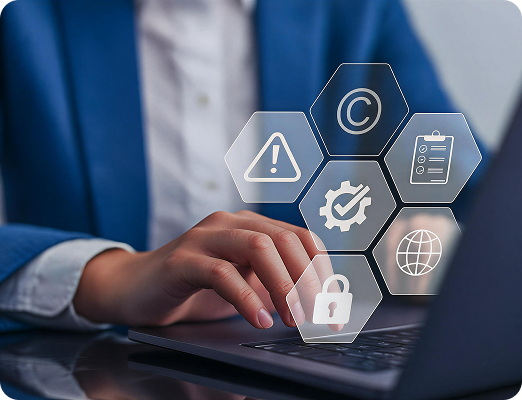
Built for security, stability & compliance
Every modernization project includes:
- Identity & Access Control embedded during re-architecture
- Automated scanning for deprecated libraries and vulnerabilities
- Audit trail setup for compliance visibility
- Encryption, key management, and compliance-by-design workflows
Featured Insights
FAQs
What are legacy modernization services?
Legacy modernization services upgrade outdated applications and infrastructure so they are cheaper to run, faster to change, and safer to operate. At Wishtree, that includes a legacy architecture audit, a phased roadmap (rehost, refactor, replatform, or rebuild), microservices re-architecture, Docker and Kubernetes containerization, cloud-native replatforming to AWS, Azure, or GCP, AI-powered refactoring, and SOC 2, HIPAA, and ISO 27001 alignment. Clients typically see 30–50% lower infrastructure costs and 40% faster deployment cycles.
What is legacy system modernization, and when do you need it?
Legacy system modernization is the process of updating old software and infrastructure to modern, cloud-native architectures without losing the business logic they hold. You need it when maintenance costs keep rising, new features take too long to ship, deprecated libraries create security risks, or the system can’t scale or integrate. In our logistics case study, modernizing a legacy ERP cut the AWS bill by 38% and reduced deployment time from 2 weeks to 3 days.
How do you ensure business continuity during modernization?
At Wishtree, business continuity is non-negotiable. We adopt a phased modernization strategy that includes staging environments and canary releases for safe rollout, shadow deployments that run in parallel to legacy systems, automated rollbacks for failure recovery, data backup, versioning, and real-time syncs to prevent loss.
This ensures you modernize without disrupting operations, SLAs, or customer experience.
How long does a typical legacy modernization take?
Our clients typically begin seeing results from a pilot modernization in 6–10 weeks. The full roadmap is modular.
Critical workloads and databases are prioritized. Services are migrated incrementally. Ongoing performance benchmarks guide the pace
We adjust timelines based on your current architecture, compliance needs, and in-house bandwidth.
Can we keep some legacy systems while modernizing others?
Absolutely. Wishtree supports hybrid modernization. You can expose legacy systems via APIs or service bridges, maintain operational continuity while building cloud-native extensions, and use event-based architectures to sync old and new components
This lets you modernize at your own pace, without forcing a disruptive all-or-nothing approach.
Do you use AI in legacy system modernization?
Yes. Wishtree uses AI-powered tooling to make legacy modernization smarter and faster.
We have code dependency mapping to identify risks and refactor safely, automated test case generation to validate old vs. new behaviors, and AI-assisted impact analysis for prioritization and risk reduction.
With these accelerators, our teams can cut modernization time and cost by up to 40% - while improving accuracy and control.