TL;DR
Having data isn’t the same as having AI-ready data. Most enterprise workflows need context pulled from several systems at once, and dumping everything into one index just gives Claude more noise to sort through. The fix is building “context sets”, the specific records, docs, and policies a given task actually needs, assembled dynamically by entity and user role, not one giant searchable pile. This means keeping systems of record, governance, retrieval, and the AI application itself clearly separated, so Claude never quietly becomes the source of truth. AWS handles identity, networking, and infrastructure, Databricks handles governance and lineage through Unity Catalog, and Claude sits on top of both. The practical path: start with one workflow, map what it actually needs, build governed retrieval for just that, then expand.
Executive summary
Claude is only as useful as the business context surrounding it. This blog by Wishtree Technologies explains how enterprises can build Claude-ready context across AWS and Databricks without creating a parallel AI data silo.
Introduction
Having data is not the same as making it AI-ready. Enterprise data lakes and platforms were not built for language models. The challenge is assembling messy, multi-system context into something an LLM can actually use.
Real operational workflows demand data from everywhere at once:
- – Customer support: Combines CRM records, static docs, and open tickets.
- – Claims processing: Merges unstructured email threads with policy PDFs and case databases.
- – DevOps: Cross-references live system logs with internal runbooks and code repos.
Asking “How do we connect Claude to our data?” misses the point. Ask “How do we feed Claude the exact right context, securely, for a specific job?”
Bridging that gap requires more than an API. Anthropic handles the model connectors, while cloud platforms like AWS and Databricks supply the essential security, data pipelines, and
governance required for production reliability.
Wishtree Technologies brings experience across both sides of this architecture as an
AWS Partner and a
Databricks Partner. We understand the underlying cloud infrastructure, data engineering, governance, and AI implementation considerations required to connect enterprise data with Claude in a practical way.
The problem with “connect everything”
The fastest way to create a poor AI experience is to expose every available source and expect the model to find what matters.
That approach creates four problems:
- – The model receives information that has little connection to the user’s task.
- – Old documents and current records may appear together without clear priority.
- – Sensitive fields may be included even when they are not needed.
- – Larger, noisier requests require more processing and more review.
Enterprise AI needs reliable access to relevant data.
That begins with the workflow.
Design around context sets
Data sources describe where information is stored. Context sets describe what information a workflow needs.
A context set for a customer-support workflow might contain:
- – Recent customer interactions
- – Open and recently resolved tickets
- – Approved product documentation
- – Relevant service-level policies
- – Account status and entitlement information
A context set for an engineering incident might include:
- – The incident timeline
- – Recent deployment details
- – Relevant logs and alerts
- – The service runbook
- – Similar resolved incidents
The context set should be assembled dynamically according to the task, user role, and current entity – such as a customer, claim, incident, account, or order.
This is more reliable than creating one broad index of all enterprise information and asking Claude to separate useful facts from noise at runtime.
The architecture behind Claude-ready data
A Claude-ready data architecture should separate four layers:
| Layer |
Purpose |
Typical technologies |
| Systems of record |
Preserve authoritative business data |
Operational databases, CRM, ERP, ticketing systems |
| Data and governance layer |
Organise, secure, and govern structured and unstructured data |
Databricks, Unity Catalog, Amazon S3, data warehouses |
| Context and retrieval layer |
Select relevant data for a specific task |
APIs, vector search, metadata filters, retrieval services, MCP integrations |
| AI application layer |
Use Claude to generate, summarise, classify, recommend, or prepare actions |
Claude APIs, enterprise applications, agents, workflow services |
This separation matters. Claude should not become the
system of record, and an AI index should not silently become a replacement for governed enterprise data.
The model should receive the context it needs through controlled interfaces. The underlying business systems should continue to own the data and the transactions.
AWS patterns for Claude workflows
For organizations building on AWS, Claude-powered applications can be designed around existing AWS security, networking, data, and application services. As an AWS Partner, Wishtree helps enterprises connect these foundations to AI workflows without treating model integration as a separate architecture.
A typical AWS architecture may include:
- – Amazon S3 for governed document and object storage
- – AWS IAM for user, service, and role-based access control
- – Amazon VPC and private networking patterns for application isolation
- – Amazon CloudWatch and CloudTrail for monitoring and activity records
- – Amazon Bedrock for managed model access and integration with AWS-native AI services
- – Knowledge Bases and retrieval services for grounding model responses in approved enterprise content
- – Lambda, ECS, or EKS for application and orchestration components
AWS Marketplace materials position Claude Enterprise around enterprise security, large-scale knowledge access, and integration with existing business tools. The architecture decision should still be made per workload. Not every use case needs the same retrieval method, deployment pattern, or level of automation.
The important point is to keep identity, networking, application permissions, monitoring, and data access under a coherent AWS operating model.
Databricks patterns for governed context
For organizations using Databricks, Claude-ready context can be built on top of governed lakehouse and Data Intelligence Platform foundations. As a Databricks Partner, Wishtree helps enterprises bring together data engineering, governance, retrieval, and AI application patterns across the platform.
Relevant patterns may include:
- – Unity Catalog for governing tables, files, models, functions, and other data and AI assets
- – Lakehouse architecture for bringing different data types together without losing governance
- – Metadata and lineage to understand where information came from and how it is used
- – Feature and analytical datasets for workflows that require business metrics or historical patterns
- – Vector search or retrieval services for locating relevant documents and records
- – Unity AI Gateway for governing model and agent interactions, including runtime calls and AI-related activity
Databricks has expanded its governance approach beyond data assets to include interactions between models, agents, and tools through Unity AI Gateway. This is important because enterprise AI risk does not stop at the dataset. It also includes what the model can call, what information it can retrieve, and what actions it can initiate.
Databricks patterns for governed context
Connectors and MCP integrations can give Claude access to business applications,
internal knowledge, and tools. They should be treated as controlled interfaces.
For each integration, define:
- – Which users or services can invoke it
- – Which records or objects it can retrieve
- – Which fields must be masked
- – Whether it has read-only or write capability
- – What parameters are allowed
- – What gets logged
- – What happens when the source system is unavailable
A read-only connector that retrieves approved information has a different risk profile from a tool that can update a customer record, create a ticket, or trigger a financial transaction.
The connector should therefore be governed like any other application integration. The fact that Claude is calling it does not reduce the need for authentication, authorisation, validation, and monitoring.
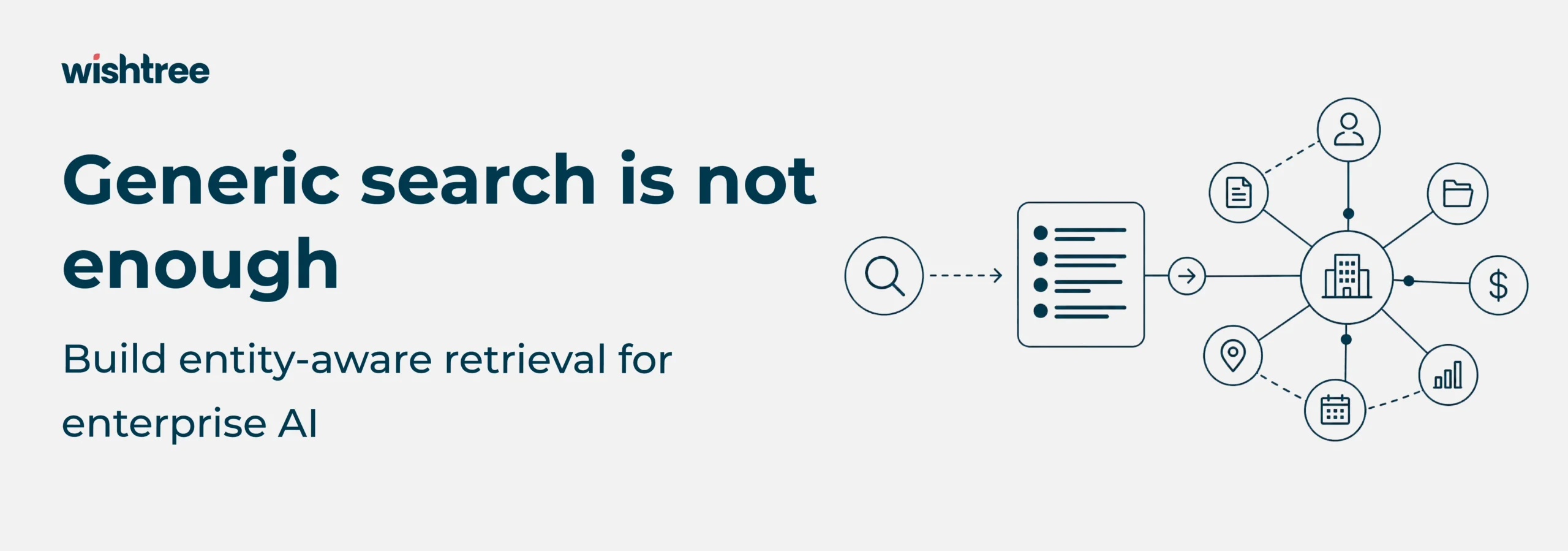
Build entity-aware retrieval
Generic search is rarely enough for enterprise workflows.
Retrieval should understand the entity the user is working on:
- – Customer
- – Account
- – Claim
- – Order
- – Ticket
- – Employee
- – Product
- – Incident
When a user opens a case, the application should assemble relevant information for that case rather than asking Claude to search the entire enterprise.
A well-designed retrieval layer can:
- Identify the current entity and user role
- Apply access and data-quality rules
- Retrieve approved documents, records, and events
- Remove irrelevant or restricted information
- Present the context with source identifiers and timestamps
- Pass the resulting context to Claude
This gives the model a clearer working set and gives users more confidence in where the answer came from.
Do not create an AI-only data silo
Creating a separate data store for AI can seem convenient. It may offer a quick way to prepare content for retrieval, but it also creates long-term risks:
- – The AI copy may become outdated
- – Governance rules may be duplicated inconsistently
- – Ownership may become unclear
- – Users may treat generated summaries as authoritative records
- – Changes in the source systems may not flow through quickly enough
A better approach is to use existing systems of record and data governance foundations, then add an AI-specific context layer on top.
That layer can contain indexes, embeddings, metadata, summaries, and retrieval logic. It should still point back to authoritative sources and preserve lineage.
Observability must include context
Monitoring only the final response is not enough. When an AI workflow produces a poor answer, the issue may be the model, the prompt, the retrieval logic, the source data, or the permissions applied.
A useful observability layer should capture:
- – Which user initiated the request
- – Which workflow was used
- – Which connector or retrieval service was called
- – Which records or documents were returned
- – Which model and prompt version were used
- – Whether the user accepted, edited, or rejected the output
- – Whether a downstream action was taken
This makes it possible to answer a practical question:
Did the model produce a poor answer, or did the workflow provide poor context?
The answer determines whether the fix belongs in the prompt, retrieval layer, data quality process, access policy, or application design.
A practical implementation path
Enterprises can approach Claude-ready data in four stages:
1. Choose one workflow
Start with a
use case that has a clear user, measurable friction, and defined data sources.
2. Map the required context
Identify the records, documents, events, and policies required to complete the task. Do not begin by indexing everything.
3. Build governed retrieval
Create access-controlled views, APIs, searches, or connector patterns that return only the information required for the workflow.
4. Instrument and improve
Monitor retrieval quality, user corrections, response quality, latency, cost, and downstream outcomes. Improve the context design before expanding to additional workflows.
This approach creates reusable patterns without committing the organization to an AI data architecture that has not been tested in practice.
Conclusion
Claude does not need unrestricted access to enterprise data to be useful. It needs the right information, from authoritative sources, delivered through controlled interfaces for a defined business task.
That requires more than connecting an API. It requires a context architecture that brings together data governance, retrieval, identity, application permissions, lineage, and observability.
AWS and Databricks can provide important foundations for this work. AWS supports the infrastructure and application environment, while Databricks helps organizations govern data and AI assets and monitor how models and tools interact with them. Claude then becomes part of a broader enterprise system.
Not only a part of the Claude Partner Network,
Wishtree Technologies is also an AWS Partner and Databricks Partner helping enterprises build practical AI solutions across cloud, data, and application environments.
With Claude as part of that
technology landscape, we help connect governed enterprise context to production-ready AI workflows. without weakening the systems of record, security controls, or ownership models that the business already depends on.
The practical starting point is one workflow. Identify the required context, expose it through governed retrieval, measure the outcome, and build from what works.
Contact us today to get started.
Frequently Asked Questions (FAQs)
Do we need to move all enterprise data to one platform before using Claude?
No. Claude can work with multiple systems through connectors, APIs, retrieval services, and MCP integrations. The priority is governed access and useful context, not forced consolidation.
Is a large context window enough?
No. A large context window does not correct poor data quality, irrelevant retrieval, conflicting records, or weak permissions. Context must be selected and structured around the task.
Should Claude have direct write access to enterprise systems?
Usually not as a starting point. Claude can prepare an action, but the application should validate it and require
appropriate authorisation before changing a business record.
How should AWS and Databricks work together?
AWS can provide infrastructure, identity, networking, application services, and model-access patterns, while Databricks can provide governed data, lineage, analytical assets, and AI governance. The exact split depends on the customer’s existing architecture and workload.
Where does Wishtree fit?
Wishtree helps enterprises design and implement Claude-ready context across AWS, Databricks, and
business applications. That includes data access patterns, retrieval, connectors, governance, observability, and workflow integration.