


Introduction
In today’s digital world, businesses have an important decision to make when choosing software solutions: should they go for custom software products or Software as a Service (SaaS) solutions? This choice will impact how organizations run their operations, grow their business, and compete in their industries.
Custom software development gives businesses the chance to create tailored solutions that perfectly fit their needs. These applications are specifically designed with the organization’s requirements, workflows, and goals in mind. On the other hand, SaaS solutions are readily available and can be implemented quickly, but they offer standardized features that businesses have to adapt to.
The discussion between custom software and SaaS solutions has become more intense as companies look for the best way to digitally transform. This blog will delve into the main advantages of custom software products, showing why they are often better than SaaS alternatives for businesses aiming for long-term success and a competitive edge in their markets.
Understanding Custom Software Product Development and SaaS Solutions
Custom software development creates tailor-made applications specifically catering to your organization’s unique needs. These solutions are:
- Designed from scratch to match exact specifications.
- Owned and controlled entirely by your business.
- Highly scalable and adaptable to changing requirements.
- Integrated seamlessly with existing systems.
SaaS (Software as a Service) products offer ready-to-use solutions delivered through cloud-based platforms. Common examples include:
- Customer Relationship Management (CRM) systems.
- Project management tools.
- Email marketing platforms.
- Accounting software.
The deployment methods for these solutions differ significantly:
Custom Software:
- Installed on your local servers or private cloud.
- Direct access to source code.
- Complete control over updates and modifications.
- One-time development cost with maintenance fees.
SaaS Products:
- Accessed through web browsers.
- Hosted on vendor’s servers.
- Regular automatic updates.
- Subscription-based pricing model.
The ownership structure creates distinct advantages and limitations. Custom software grants you full intellectual property rights and unrestricted modification capabilities. SaaS solutions limit your control to user-level configurations within pre-defined parameters set by the vendor.
Customization capabilities vary dramatically between these approaches. Your custom software can incorporate specific workflows, unique business rules, and proprietary algorithms. SaaS products typically offer customization through settings, templates, and add-ons – but within the boundaries of their existing architecture.
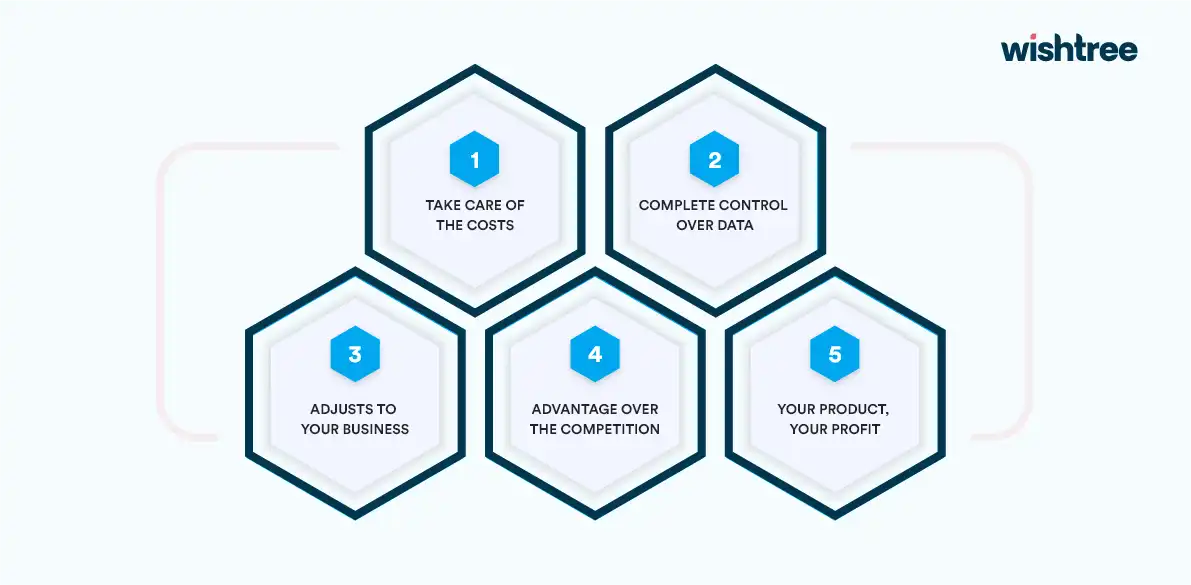
1. Alignment with Business Requirements and Flexibility
Custom software development creates a perfect match between your business processes and technological solutions. Your unique workflows, specific industry requirements, and operational nuances shape the development process, resulting in software that mirrors your exact needs.
Real-time Business Alignment
- Tailored user interfaces reflecting your team’s daily operations.
- Specific workflow automation matching your established processes.
- Custom reporting features aligned with your KPIs.
- Integration capabilities designed for your existing tools.
SaaS solutions present inherent limitations in meeting specific business requirements. You’ll often find yourself adapting your processes to fit the software’s predetermined features, leading to:
- Unused features you’re still paying for.
- Missing functionalities crucial to your operations.
- Workflow compromises affecting productivity
- Limited customization options.
Integration Advantages
Custom software seamlessly connects with your existing infrastructure, including legacy systems. This native integration brings substantial benefits:
- Reduced training time for employees.
- Lower implementation costs.
- Minimal disruption to existing workflows.
- Enhanced data flow between systems.
The role of cloud engineering amplifies these benefits through:
- Scalable infrastructure matching your growth.
- Flexible deployment options.
- Custom security protocols.
- Automated backup solutions.
While both custom and SaaS solutions leverage cloud capabilities, custom software provides greater control over cloud resources. You can optimize performance, scale specific components, and implement precise security measures based on your requirements.
Custom solutions also enable rapid adaptation to market changes. When new opportunities or challenges arise, your development team can quickly implement necessary modifications without waiting for a SaaS provider’s update cycle or feature rollout.
2. Cost Efficiency and Control Over Expenses
Custom software development offers a unique financial advantage with its cost structure. While the initial investment may seem high, the long-term benefits result in significant cost savings for businesses.
Key Cost Structure Differences:
| Cost Factor | Custom Software | SaaS (Software as a Service) |
|---|---|---|
| Initial Cost | One-time development cost. | Ongoing monthly or annual subscription fees. |
| Investment Model | Requires upfront investment. | Spread-out payments over time. |
| Cost Predictability | No hidden charges or unexpected price increases. | Potential for price increases or additional hidden fees. |
Breaking Free from Subscription Models
Custom software eliminates recurring fees associated with SaaS solutions:
- License renewal costs.
- Per-user charges.
- Feature-based pricing tiers.
- Storage capacity fees.
- Support package expenses.
Bundled Features and Cost Optimization
SaaS platforms often include unnecessary features that inflate costs:
- Pre-packaged solutions force businesses to pay for unused functionalities.
- Custom software includes only essential features.
- Targeted development reduces waste in software spending.
- Scalable architecture allows cost-effective feature additions.
The Financial Impact of Software Ownership
Custom software development creates lasting value through:
- Asset appreciation as features expand.
- No dependency on vendor pricing changes.
- Freedom to modify without additional costs.
- Reduced support administration costs.
- Control over maintenance schedules.
Running Costs Comparison
Custom software typically requires:
- Server hosting expenses. (which can be optimized through effective management)
- Internal IT support.
- Periodic updates and maintenance.
SaaS solutions include:
- Monthly subscription fees.
- Additional user licenses.
- Premium feature costs.
- Integration expenses. (often complex and costly)
- Data migration charges. (which can be substantial)
The investment in custom software transforms into business equity, creating a tangible asset that appreciates with market value. This ownership model eliminates the perpetual expense cycle common in SaaS solutions, providing businesses with complete control over their software expenditure and development trajectory.
Moreover, as highlighted in this SEC filing, the financial implications of such investments extend beyond mere cost savings, influencing overall business strategy and operational efficiency.
In contrast, for businesses seeking investment platforms and tools, understanding the nuances of custom versus SaaS solutions becomes crucial in making informed decisions that align with their financial goals and operational needs.
3. Data Ownership and Security Considerations
Data ownership is a key factor that sets custom software products apart from SaaS solutions. When you create custom enterprise software, you have full control over your company’s data. This includes:
- Where your raw data is stored?
- How your data is processed?
- Who has access to your data?
- How long you keep your data?
- How you back up your data?
With SaaS providers, while they offer convenience, your sensitive business information is in the hands of a third party. This vendor-managed approach introduces potential vulnerabilities in data security and privacy, as highlighted in this article about data governance and SaaS.
Security Risks with SaaS Providers:
- Shared infrastructure exposing data to potential breaches.
- Limited visibility into security protocols.
- Dependency on vendor’s security measures.
- Potential data access by unauthorized vendor employees.
- Risk of data loss during vendor transitions.
Custom solutions allow for strong data engineering practices designed specifically for your security needs. Modern data engineering uses AI and ML capabilities to:
- Detect unusual patterns in how data is accessed.
- Identify potential security threats as they happen.
- Automate responses to security incidents.
- Predictively maintain systems.
- Monitor the integrity of systems.
Regulatory Compliance Benefits
Custom software development offers specific advantages when it comes to regulatory compliance:
- Direct control over where your data is stored.
- Ability to implement region-specific requirements for handling data.
- Custom audit trails and reporting capabilities.
- Flexibility to adapt to new regulations as they arise.
- Immediate response to changes in compliance requirements.
The use of AI and ML safeguards in custom solutions adds an extra layer of security. These technologies analyze patterns, predict potential weaknesses, and strengthen your framework for protecting data. You can implement specific security measures that align with the standards of your industry and the policies of your organization, ensuring comprehensive protection for sensitive information.
However, when using SaaS solutions, companies often face significant compliance challenges due to the lack of control over their own data and the shared responsibility model that these services operate under. This can lead to serious implications if not managed properly, further emphasizing the need for robust custom software solutions tailored to meet specific business needs and regulatory requirements.
4. Competitive Advantage Through Customization and Innovation
Custom software development empowers businesses to create unique user experiences that set them apart in crowded markets. While SaaS solutions offer standardized features, custom-built applications allow companies to implement distinctive functionalities tailored to their specific market needs.
Consider these competitive advantages of custom software:
- Market Responsiveness: Your business can quickly adapt to market changes by modifying features and functionalities in real-time.
- Brand Differentiation: Create signature experiences that reflect your brand’s unique value proposition.
- Innovation Leadership: Implement cutting-edge technologies before they become widely available in SaaS platforms.
Custom software’s adaptability enables businesses to stay ahead through:
Rapid Feature Development:
- Deploy new functionalities based on user feedback.
- Test innovative ideas without waiting for vendor updates.
- Scale features according to market demand.
AI/ML Integration:
- Build personalized recommendation engines.
- Implement predictive analytics for customer behavior.
- Create automated decision-making systems.
Digital Product Engineering Excellence:
- Design intuitive user interfaces specific to your audience.
- Optimize performance for your exact use cases.
- Integrate with existing tools seamlessly.
Real-world examples showcase the power of customization:
“A retail chain developed custom inventory management software with AI-powered demand forecasting, reducing stockouts by 35% and increasing sales by 28%”
“A healthcare provider created a custom patient management system with integrated telemedicine features, leading to a 45% increase in patient satisfaction”
Custom software allows businesses to build proprietary algorithms and unique workflows that create sustainable competitive advantages. By controlling the development roadmap, companies can continuously innovate and adapt their digital solutions to maintain market leadership.
The ability to integrate emerging technologies like blockchain, IoT, or advanced analytics gives businesses the freedom to experiment with new service models and revenue streams. This level of innovation and customization remains unattainable with standardized SaaS solutions.
5. Revenue Opportunities and Intellectual Property Benefits
Custom software development creates unique opportunities for businesses to generate additional revenue streams through software ownership. When you invest in custom solutions, you gain exclusive rights to monetize your software through various channels:
Licensing Opportunities
- Sell software licenses to other businesses in your industry.
- Create subscription-based access for specific features.
- Develop white-label versions for resale.
- Package your solution as a standalone product.
The intellectual property rights of custom software give you complete control over its commercialization. You decide the pricing models, distribution channels, and market positioning of your product.
Revenue Generation Models
- Direct software sales to end-users.
- Franchise opportunities with customized implementations.
- Revenue sharing partnerships with distributors.
- Consulting services based on your proprietary solution.
SaaS solutions, by contrast, limit your revenue potential. You pay for usage rights without gaining any ownership benefits. The SaaS provider maintains exclusive control over the product, leaving no room for additional monetization opportunities.
Strategic Partnership Benefits
Working with expert custom software developers enhances your revenue potential through:
- Technical expertise for scalable architecture.
- Market-ready development practices.
- Professional documentation and support systems.
- Ongoing maintenance and updates.
Proprietary Asset Value
Custom software becomes a valuable business asset that:
- Increases company valuation.
- Attracts potential investors.
- Creates barriers to entry for competitors.
- Generates passive income through licensing.
Expert partnerships in custom software development help you build solutions that serve dual purposes – addressing your operational needs while creating marketable products. This approach transforms your software investment from a cost center into a profit-generating asset.
Conclusion
Wishtree Technologies is a great example of excellence in custom software development, with over ten years of experience in combining advanced technology with in-depth industry knowledge to create transformative digital solutions.
A Product Engineering company with a proven track record of serving global customers, Wishtree Technologies provides tailored solutions to clients ranging from Fortune 500 companies (Thoma Bravo, Vista Equity Partners), UN Agencies (WHO, UNDP, World Bank), Nonprofits, and Startups.
Contact us today for the best custom software solution for your startup or enterprise!


